Case study: HR 60 Extra G withstands 2,300 bar in a subsea cable joint application
HR 60 Extra G
SÄKAPHEN’s HR 60 Extra G Red and HR 60 Extra G Green are a well-established solution for corrosion protection in chemically aggressive and immersion environments. This case study illustrates how the products met an unusual and demanding set of requirements for a subsea application, including a contact pressure of 230 N/mm² and resistance to hydrogen sulfide in Black Sea seawater.
The challenge
A manufacturer of subsea cable joints approached SÄKAPHEN seeking a seawater-resistant coating for diffusion-galvanized steel components (16MnCr5). The application required a technically demanding combination of requirements:
- Substrate: diffusion-galvanized steel (16MnCr5)
- Operating environment: seawater, including Black Sea conditions with hydrogen sulfide (H₂S)
- Electrical insulation: required for galvanic isolation between galvanized steel and super duplex steel components
- Contact pressure resistance: minimum 200 N/mm² under qualification testing conditions; up to 230 N/mm² in worst-case cable tension scenarios
- Geometry: rotationally symmetric components with partial coating requirements
The contact pressure requirement was the critical factor. The coating would be applied to a sealing surface, a ring-shaped area of approximately 2,600 mm², subject to forces of up to 600 kN generated by cable tensile loads. At the qualification test level of 200 N/mm², and under worst-case loading of 230 N/mm² (equivalent to approximately 2,300 bar), the coating had to remain intact between a coated and an uncoated metal surface, with no cracking, delamination, or loss of sealing integrity.
SÄKAPHEN’s solution
Following an initial technical consultation, SÄKAPHEN recommended HR 60 Extra G Red, a two-pack, cold-cured, hydrophobic epoxy coating with ultra-high solids content. The product is self-priming and can be applied directly to metal. It provides broad chemical resistance across a pH range of 1–13, including all water types (brackish, river, sea, and deionized), and resists sulfidic, anoxic environments such as those encountered in the Black Sea. Its hard-elastic, dense film and excellent dielectric properties make it suitable for galvanic isolation between dissimilar metals.
For diffusion-galvanized surfaces, degreasing and light sweep blasting were recommended as surface preparationto optimize adhesion.
Testing and validation
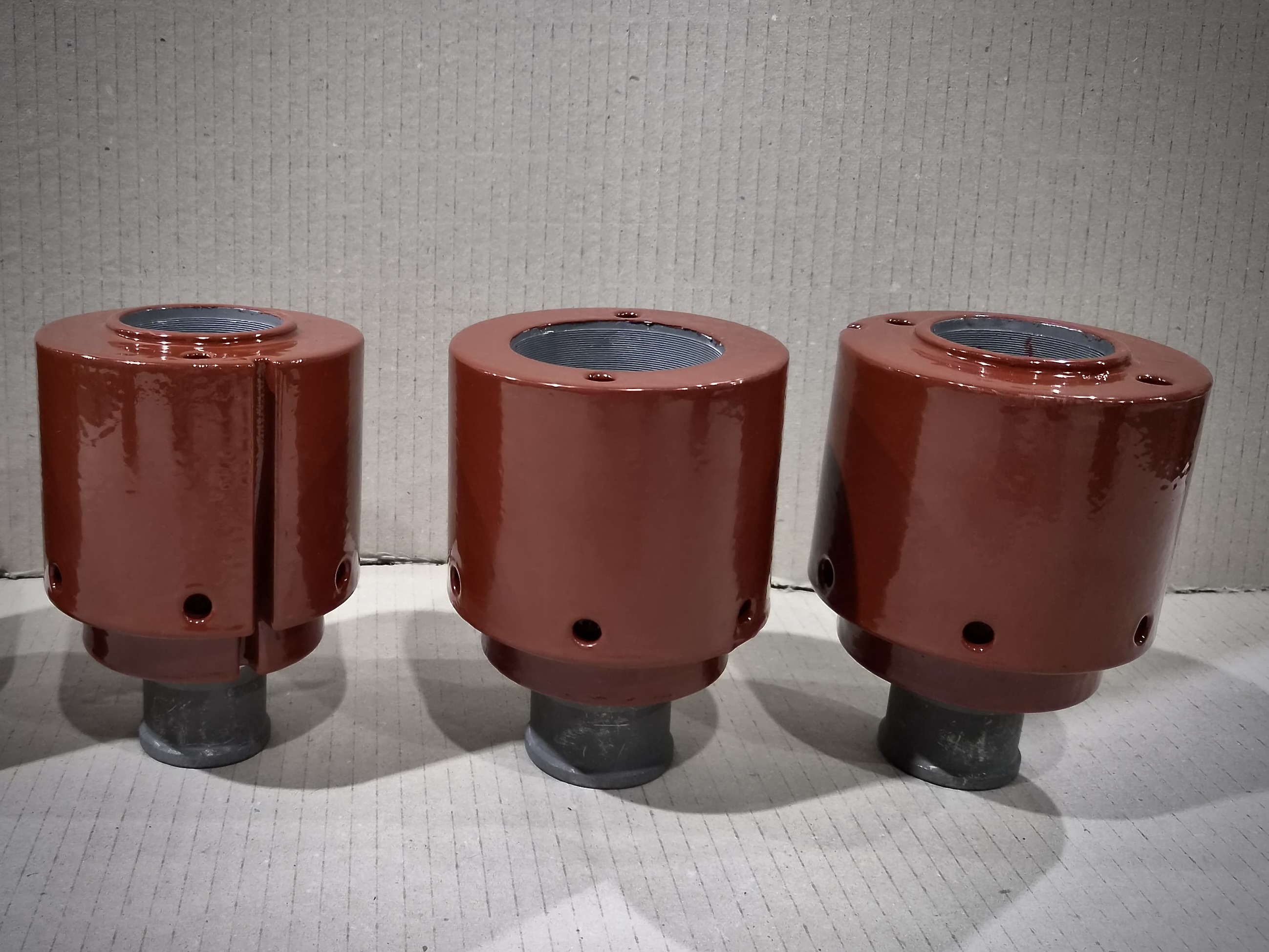
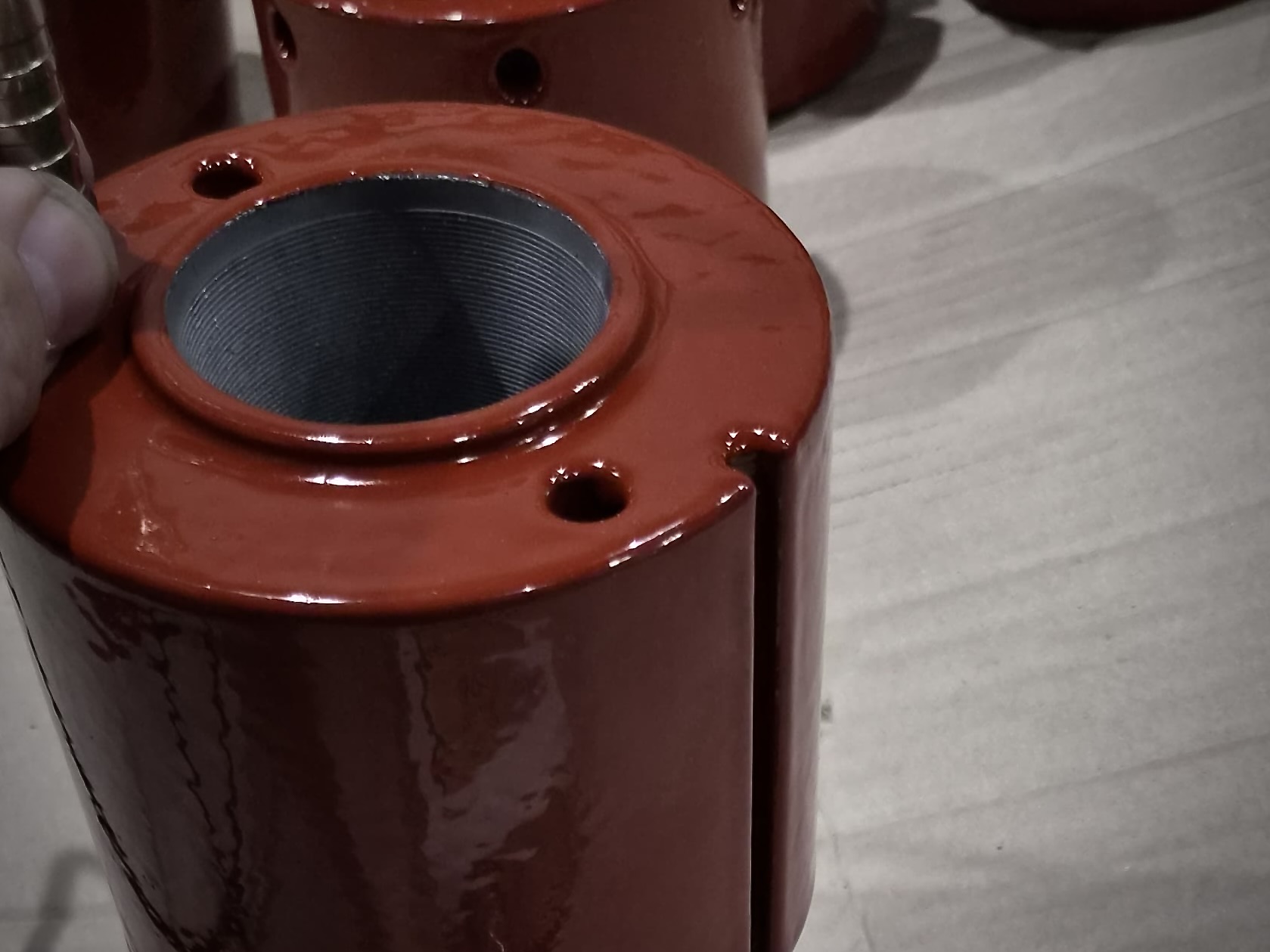
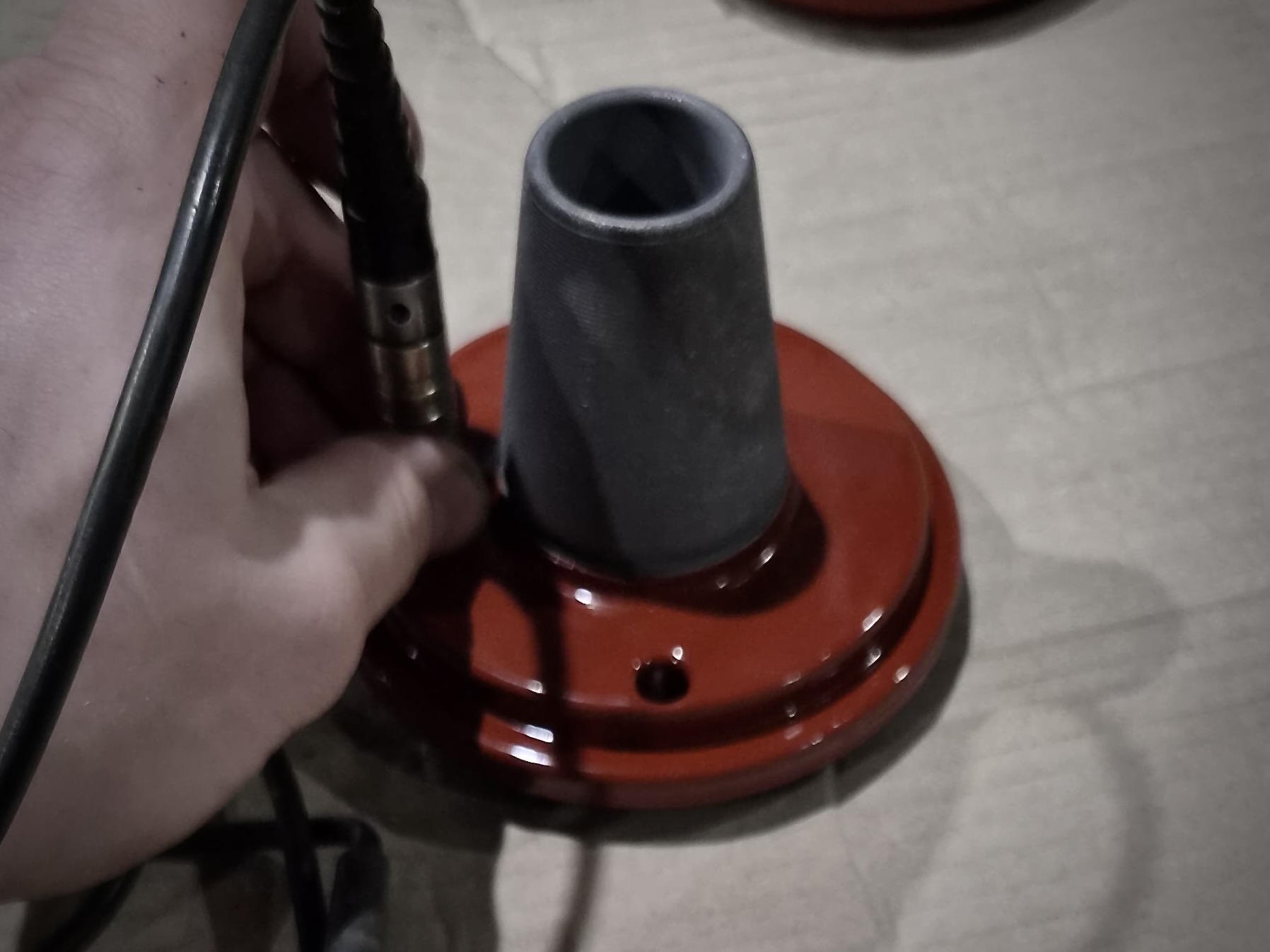
Before specifying the coating for production, the customer requested physical test samples for mechanical validation. SÄKAPHEN supplied two coated steel panels for this purpose:
The customer performed contact-pressure testing, monitoring for cracking, embrittlement, and delamination as failure indicators. The test was conducted incrementally to be able to determine the maximum achievable pressure resistance even if the target threshold had not been reached. Both samples passed: the coatings were assessed as capable of meeting the application’s mechanical requirements.
Outcome
Following successful testing, HR 60 Extra G was incorporated into the design of several components for the customer’s subsea cable joints, and manufacturing was commissioned through a third-party precision engineering firm. The result was a cost-effective, field-proven coating solution that met a specification combining seawater immersion resistance, H₂S tolerance, electrical insulation, and contact pressure resistance of up to 230 N/mm²/61,200 kg of force across the sealing ring area.
SÄKAPHEN: your partner for demanding corrosion protection challenges
SÄKAPHEN provides customers worldwide with tailored corrosion protection solutions for the most demanding industrial and subsea environments. Get in touch to discuss your next project. SÄKAPHEN is happy to help.
FAQ
1.Can epoxy coatings withstand extreme contact pressure in metal-to-metal applications?
Yes. As demonstrated in this case study, SÄKAPHEN’s cold-cured epoxy coating HR 60 Extra G Red and Green maintained their integrity under a contact pressure of 230 N/mm² (approximately 2,300 bar) applied across a ring-shaped sealing surface of about 2,600 mm². The coating showed no cracking, embrittlement, or delamination, confirming its suitability for structurally demanding metal-to-metal applications.
2. Can a coating provide galvanic isolation between dissimilar metals in subsea applications?
Yes, provided the coating has adequate dielectric properties and is applied without pinholes. SÄKAPHEN HR 60 Extra G Red and Green provide excellent electrical insulation and were specifically selected for this project to prevent galvanic corrosion between diffusion-galvanized steel and super duplex steel components in a subsea cable joint, a combination that would otherwise create a significant electrochemical potential difference.
3. Is SÄKAPHEN’s cold-cured epoxy coating HR 60 Extra G suitable for seawater immersion in hydrogen sulfide environments, such as the Black Sea?
Yes. HR 60 Extra G is resistant to all water types, including seawater, and can be used in sulfidic, anoxic environments where hydrogen sulfide is present, conditions typical of deep or enclosed sea basins such as the Black Sea. A pinhole-free application is required to ensure full barrier performance in immersion service.